
Most homeowners don’t think twice about their roof until something goes wrong. And usually, that something is water dripping where it shouldn’t be. Roof leaks are one of the most common causes of property damage in the UK, and they have a way of creeping up on you. A small gap here, a cracked tile there, and before you know it, you’re dealing with damp patches on the ceiling and a repair bill you weren’t expecting.
The good news is that most common roof leaks follow predictable patterns. If you know what to look for, you can catch them early and avoid expensive repairs. This guide covers the main causes of roof leaks, the early signs to watch for, and what you can do to keep your home protected.
What Is a Roof Leak?
A roof leak is any point in your roofing system where water finds its way through to the inside of your home. The tricky part is that the entry point where water gets in is often nowhere near the spot where you notice the damage. Water ingress can travel along roof timbers and through your roof space before showing up as a stain on your living room ceiling.
Even a minor leak that goes unnoticed can lead to serious problems:
- Water damage to plasterwork, ceilings and walls
- Mould growth in loft spaces and on internal surfaces
- Wet insulation that loses its effectiveness and drives up energy bills
- Structural damage to roof timbers if water collects over time
- Higher home insurance premiums if repeated claims are needed
That’s why keeping an eye out for the early signs of a leaking roof really matters.
Roofing Services
Most Common Causes of Roof Leaks
Most roof leakage comes down to age related wear, harsh weather or poor installation. Here are the ones we see time and again.
Cracked or Damaged Flashing
Flashing is the thin metal strips fitted around roof features like chimneys, roof vents, skylights and where two roof slopes meet in roof valleys. When installed correctly, it channels water away from these joints. But cracked flashing, damaged flashing or flashing that has been installed incorrectly can create small gaps that let water straight in. This is one of the most common causes of roof leaks, especially on older properties.
Missing or Damaged Tiles
Most roof tiles are built to last, but they are not indestructible. High winds can lift and crack them, temperature changes cause them to expand and contract, and general age related wear takes its toll. Missing tiles and damaged tiles leave visible gaps in your roof structure, giving wind driven rain a direct route into the roof space beneath.
On pitched roofs, pay particular attention to ridge tiles and any tiles along roof edges where two roof slopes meet. These areas take the brunt of bad weather.
Blocked or Overflowing Gutters
When gutters fill with leaves, moss buildup and debris, water has nowhere to go. Overflowing gutters push trapped water against the roof edges, fascias and soffits, causing water leaks into the roof structure and walls over time. Repairing a leaking gutter promptly and installing gutter guards helps stop debris building up, but even with guards in place, gutters still need clearing at least twice a year.
Flat Roof Problems
Flat roofs are especially prone to leaks because water collects on the surface rather than running off. Flat roof leaks often start around seams where the roofing materials overlap, or where an existing roof membrane has started to blister or crack. Poor quality materials or poor installation make the problem worse, and ponding water slowly finds any weak spots.
If you have a flat roof, even a small visible crack can turn into something bigger after heavy rain.
Flat Roof Replacements
Condensation in the Loft
Not every damp patch is caused by rain. When warm air from inside the house rises into a cold loft space and hits a cold surface, moisture forms. Over time, this creates damp patches that can look exactly like a leak.
Proper ventilation in the roof space and making sure insulation is installed correctly usually sorts this out. If you are not sure whether it is a leak or condensation, it is worth getting a professional roofer in to take a look.
Damaged Roof Underlay
Underneath your roof tiles sits a layer of underlay that acts as a secondary barrier against water ingress. Damaged roof underlay, whether from age, incorrect installation or wear, leaves your home exposed. Once the underlay fails, even a few missing tiles or small gaps can lead to water getting through.
How to Spot the Early Signs
Catching a leaking roof early saves you money and stress. Here is what to watch for:
- Water stains on ceilings or walls, often as yellowish or brownish rings
- Damp patches that come and go with wet or windy weather
- Dripping water during or after heavy rainfall
- Mould or mildew in loft spaces, around roof windows or on upper floor walls
- Peeling paint or wallpaper near the roofline
- Visible holes or visible cracks in roof tiles from ground level
- Moss buildup or debris collecting in roof valleys
If you spot any of these, do not wait. A small leak left alone almost always leads to further damage and bigger repair costs.
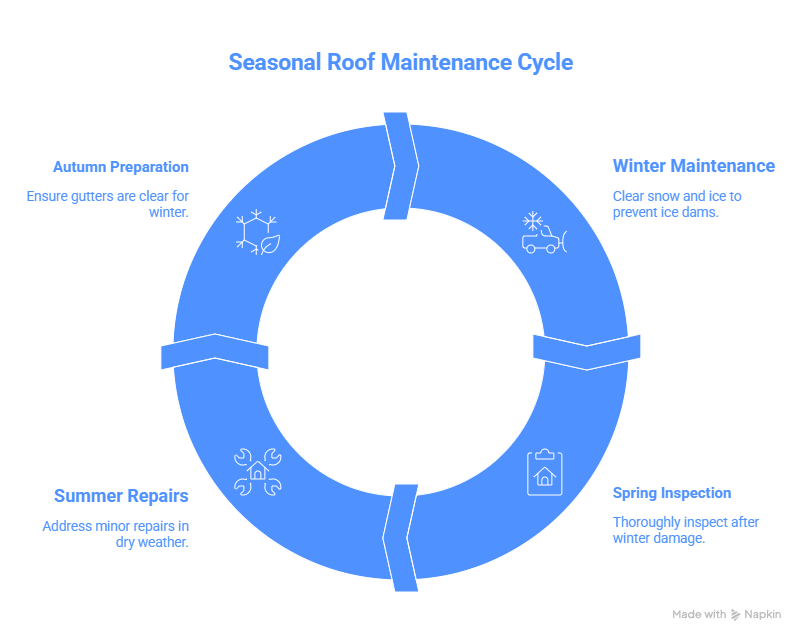
Seasonal Maintenance Tips
Different seasons throw different challenges at your roof. A bit of maintenance and roof inspections throughout the year goes a long way.
Winter
- Clear snow and ice promptly to prevent an ice dam forming, which traps melting snow and forces water under tiles
- Inspect for damage after any storms or periods of heavy rain
Spring
- Carry out a thorough inspection after the winter months
- Clean gutters and check for blocked gutters that may have filled with debris over the colder months
Summer
- Address any minor repairs while the weather is dry
- Check the condition of flashing, ridge tiles and roofing materials before the autumn rains arrive
Autumn
- Ensure gutters are clear and ready for winter
- Look for loose, cracked or damaged tiles and arrange repairs before harsh weather sets in
Repair and Prevention
The longer you leave a problem, the more it tends to cost. For small, visible issues like a single cracked tile, a temporary repair of a roof leak can reduce immediate damage while you arrange a proper repair. For anything beyond that, a professional inspection is the safest route. A good roofer will check the full roof structure, identify every weak point and entry point, and recommend the correct materials and methods.
Prevention is just as important as repair:
- Schedule regular maintenance at least once a year, ideally twice
- Invest in high quality materials like slate or clay tiles that are the best roofing materials for the UK climate
- Make sure flashing and gutters are installed correctly and follow manufacturer guidelines
- Keep gutters clear and consider installing gutter guards to reduce blockages
- Ventilate your loft space to prevent condensation issues
Over the long term, regular upkeep and the right roofing materials can save you significantly on repair costs.
When to Call a Professional Roofer
If you notice persistent water stains, large areas of damaged tiles, sagging in the roof structure, or water leaks that keep returning after heavy rainfall, it is time to call in a professional roofer.
A good contractor will bring:
- Expertise in identifying the real source of leaks, not just the symptoms
- Experience with heritage and restoration work as well as modern roofing systems
- Access to premium roofing materials and correct materials for your property type
- Long lasting solutions that protect your home and enhance its value
Look for someone with a proven track record, clear communication and a focus on residential work.
Contact Us
Closing Thoughts
Roof leaks are common, but they do not have to turn into a costly nightmare. Most of the causes are predictable, from cracked flashing and missing tiles to blocked gutters and flat roof wear. By knowing the early signs, keeping up with seasonal maintenance and using correct materials, you can prevent leaks before they start and deal with problems quickly when they do.
C Kearney Roofing brings over 20 years of hands-on experience to every job, combining traditional craftsmanship with high quality materials to deliver roofing solutions that last. Whether you need a full inspection, a targeted repair or advice on keeping your roof in top condition, our team is here to help homeowners across the West Midlands protect their properties for the long term.
Contact us today to discuss how we can help protect your home with a high-quality roof!
FAQs
What are the most common causes of roof leaks?
The most common causes are cracked or damaged flashing, missing tiles, blocked gutters and age related wear to roofing materials. Flat roofs can also develop leaks where seams overlap or membranes start to crack. In many cases, the problem builds up gradually over time, so regular maintenance is the best way to catch issues before they lead to water damage inside your home.
Can I fix a roof leak myself?
For very minor issues like a single slipped tile that you can safely reach, a temporary fix can limit damage until a professional roofer gets to it. But roof work carries real safety risks, and it is easy to miss the actual entry point of a leak if you are not experienced. For anything beyond a quick patch, getting a professional inspection is the safest and most cost effective route.
How often should I have my roof inspected?
At a minimum, once a year. Ideally, you want a check in spring after the winter weather and again in autumn before the worst of the wet or windy weather arrives. If your property has an older roof or you have noticed any early signs like water stains or damp patches, more frequent inspections will help you stay ahead of problems and keep repair costs down.
C Kearney Roofing LTD
Trusted experts in roofing solutions.
Professional service, reliable craftsmanship, and coverage across the West Midlands.
Locations We Cover
Why Choose Us
- Over 20 years of experience in the industry
- Focused on complete customer satisfaction
- Fully insured for your security
- Workmanship and materials guaranteed
- Rapid response available for emergency situations
- Use only the best materials to protect your property
- Free, no-obligation estimates and honest advice
- We are proud to support our customers before, during, and after every job