
Concrete roof insulation plays a vital role in maintaining thermal comfort, energy efficiency, and reducing heating costs for any building or house. Achieving optimal U-values in roof insulation is essential for improving thermal performance.
This guide explores the significance of U-values in insulation, providing insights into the best materials, techniques, and systems for insulating a concrete roof, flat roof, or warm roof construction. By understanding these elements, homeowners and building professionals can ensure that their properties remain comfortable, compliant, and efficient while adhering to UK building regulations.
Understanding U-Values and Their Importance
U-Value: Definition and Significance
The U-value measures thermal transmittance, indicating the rate of heat loss through a roof, wall, floor, or ceiling. Lower U-values represent better thermal insulation and energy performance. In roof construction, this is a key factor for both warm deck and cold roof systems. In the UK, building regulations specify maximum U-value limits for different components to improve energy efficiency.
| Roof Type | Maximum U-Value (W/m²K) |
| Pitched Roof (insulated) | 0.18 |
| Flat Roof | 0.18 |
| Concrete Roof | 0.25 |
A flat roof construction or concrete deck must be carefully designed to achieve these values through appropriate insulation types, thickness, and installation method. Understanding these standards forms the foundation for choosing suitable insulation boards and methods that enhance thermal performance and ensure regulatory compliance.
Concrete Roof Services
Insulation Materials: Choosing the Right One
Insulation Materials Affect Thermal Conductivity
The choice of roof insulation materials plays a crucial role in determining thermal conductivity and overall energy efficiency. For concrete flat roof insulation, selecting suitable materials ensures a high-performing roof system. Commonly used insulation types include PIR insulation boards, rockwool, mineral wool, and expanded polystyrene.
- Expanded polystyrene: Lightweight and durable, with a thermal conductivity of approximately 0.038 W/mK.
- Mineral or rockwool: Provides fire and smoke resistance, soundproofing, and a thermal conductivity around 0.035 W/mK.
- PIR insulation boards: Highly effective for warm deck construction method, offering low U-values in a thin range of thicknesses.
Sustainable options, such as recycled materials or eco-friendly insulation, can also reduce a building’s carbon footprint. Whether insulating a roof deck, concrete slab, or ceiling level, the goal is to create a continuous insulation layer that improves comfort and reduces energy use.
Installation Techniques: Ensuring Insulation Effectiveness
Proper installation determines how well insulation performs over time. Even the best roof insulation boards can underperform when incorrectly installed, leading to thermal bridging, moisture, or even condensation problems in the roof structure.
Key installation considerations include:
- Sealing and coverage: Ensure complete coverage of the deck with insulation layers and a vapour control layer to prevent moisture ingress.
- Professional installation: Skilled contractors can install insulation using mechanically fixed systems or fully-adhered membranes to maintain airtightness.
- Moisture control: Employ roof membranes, ventilation solutions, and mastic asphalt layers for added protection.
In warm roof or inverted roof systems, the insulation boards are placed above the roof deck, whereas in cold roof construction, insulation is laid at ceiling level beneath the joists. Each method has its own benefits—for instance, the warm roof approach reduces condensation risk and enhances long-term durability.
Concrete Roof Tiles and Installation
Concrete Roof Tiles: Enhancing Aesthetic and Functionality
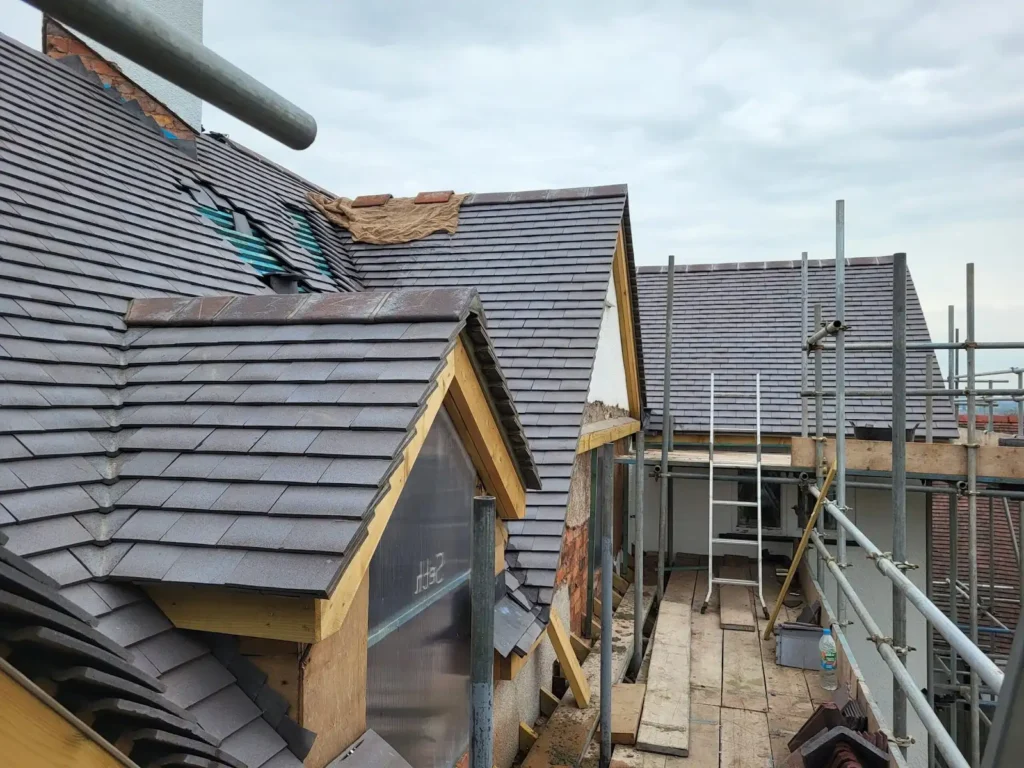
Concrete roof tiles add not only visual appeal but also functional benefits such as added thermal mass and resistance to fire, wind, and rain. In flat roof construction, tiles may form part of a built-up felt or mastic asphalt covering for additional protection.
- Durability: Concrete tiles can last when maintained and are often manufactured for decades-long lifespan.
- Insulation properties: When combined with pir insulation boards or roof membranes, they improve thermal performance.
- Installation: Professional teams ensure proper fixings, sealing around joists, and high-quality lay patterns to prevent leaks.
When installed correctly, they contribute to maintaining low U-values and high energy efficiency, making them suitable solutions for modern flat roof and pitched roof projects alike.
Contact Us
Moisture Control and Durability
Effective moisture management safeguards the roof construction from degradation. An improperly sealed roof deck can allow water ingress, reducing the durability of both the insulation and the concrete deck beneath.
Success in this area depends on:
- Waterproofing: Using a vapour control layer, roof membrane, and built up felt or mastic asphalt surface.
- Ventilation: Maintaining proper airflow between layers of the roof structure prevents condensation beneath the underside of the deck.
- Maintenance: Periodic roof inspection ensures the system remains durable and moisture-free throughout its life cycle.
These integrated techniques help to create long-lasting roof systems with consistent thermal performance.
Energy Efficiency and Building Regulations
UK building regulations stipulate U-value targets for roofs to promote energy savings. Improving roof insulation can lead to better Energy Performance Certificate (EPC) ratings and reduce heating demand across the house.
| Insulation Improvement | Potential Energy Savings (%) |
| Basic Insulation | 10–15 |
| Advanced Insulation | 20–25 |
| Comprehensive Insulation | 30+ |
For concrete roof insulation, compliance involves the correct materials, thickness, and installation method across the layers of warm decks, inverted roofs, or cold roofs. Whether the roof is a flat, pitched, or concrete flat roof, improving U-values translates directly into better energy efficiency and reduced operational costs for any building project.
Summary and Key Takeaways
Concrete flat roof insulation is essential for achieving optimal U-values, ensuring durability, and improving energy efficiency. Here are the main points:
- U-Values: Lower U-values mean better thermal performance and energy savings.
- Material Selection: Choose PIR insulation, rockwool, or sustainable insulation boards suited to your project.
- Installation Techniques: Properly install insulation, ensuring sealed vapour control layers and correct membrane placement.
- Concrete Roof Tiles: Provide both functional and aesthetic benefits, improving roof durability.
- Moisture Control: Essential for maintaining fire safety and preventing condensation.
- Regulations: Meeting the required U-value for your roof construction ensures compliance and financial benefits.
Closing Thoughts
By integrating suitable insulation types, reliable installation methods, and expert craftsmanship, it’s possible to create efficient, durable, and energy-saving roof insulation solutions for any modern house or building.
Concrete roof tiles are one of the best solutions for homeowners looking for a durable, long-lasting, and cost-effective roofing option. With a lifespan of up to 100 years, minimal maintenance requirements, and resistance to harsh weather conditions, they offer excellent value for property owners.
At C Kearney Roofing, we specialise in high-quality roofing installations and replacements. If you need advice on choosing the best roofing materials for your home or business, get in touch with our expert team today. We’re here to help you find the perfect roofing solution to protect your property for decades to come.
Contact us today to discuss your roofing needs and find the perfect concrete solution for your home or business.
FAQs
1. What U-value should I aim for with a concrete flat roof in the UK?
For most new flat roof construction in the UK, the recommended maximum U-value is typically around 0.18 W/m²K to comply with current building regulations and achieve good energy efficiency. Concrete roof insulation, whether in a warm roof or cold roof build-up, usually needs a sufficient thickness of PIR insulation boards or similar materials to meet this U-value target while controlling condensation risk.
2. Is a warm roof or cold roof better for a concrete flat roof?
A warm roof, where insulation boards are placed above the roof deck with a vapour control layer beneath and a roof membrane above, generally offers better thermal performance and significantly reduces condensation risk compared to a cold roof arrangement. Cold roofs rely on insulation at ceiling level and ventilation in the void, which can be harder to detail correctly and maintain, so many modern concrete flat roof insulation systems favour the warm deck construction method or inverted roof solutions.
3. How thick should insulation be on a flat concrete roof?
The required thickness depends on the insulation type, but achieving a U-value around 0.18 W/m²K on a flat roof often needs roughly 120–200 mm of high‑performance PIR insulation, depending on the product’s lambda value and the overall roof build-up. A detailed U-value calculation that considers all roof layers—concrete slab, vapour control layer, insulation, roof membrane, and finishes—is the most reliable way to confirm the exact thickness needed for your specific project.
C Kearney Roofing LTD
Trusted experts in roofing solutions.
Professional service, reliable craftsmanship, and coverage across the West Midlands.
Locations We Cover
Why Choose Us
- Over 20 years of experience in the industry
- Focused on complete customer satisfaction
- Fully insured for your security
- Workmanship and materials guaranteed
- Rapid response available for emergency situations
- Use only the best materials to protect your property
- Free, no-obligation estimates and honest advice
- We are proud to support our customers before, during, and after every job