If you are thinking about a roof extension, the first thing to grasp is that a roof extension planning project is not just about gaining more space. It is about staying on the right side of planning permission, building regulations, and your local authority’s rules so your new loft space is safe, legal, and adds real value to your home.
Whether you want a simple loft conversion or a larger loft extension that changes the existing roof slope, it pays to understand how the rules work before you start sketching ideas or calling builders.
Understanding Roof Extension Planning Permission
A roof extension requires planning permission when it goes beyond your permitted development rights or does not comply with the general permitted development order that covers additions to the roof of a dwellinghouse. In simple terms, planning permission ensures your project meets legal compliance and respects your neighbors, local character, and safety standards.
For most houses, the general permitted development rules allow some forms of roof enlargement without a full application, especially under Class B, which covers additions and alterations to the roof such as dormer windows or a hip to gable enlargement. However, development rights are restricted or removed in some places, such as a conservation area, areas of outstanding natural beauty, a national park, or land of special scientific interest, so identical works on one street may require planning permission on another.
Key points to check before you start any proposed development on the roof of your original house:
- Check whether your home still has permitted development rights or if the local planning authority has removed them.
- Confirm if your property is in designated land such as a conservation area, national park, area of outstanding natural beauty, or site of special scientific interest where stricter limits apply.
- Identify whether your home is a detached house, semi detached, terraced houses, or one or more flats, because permitted development for roof extensions generally does not apply to flats and detached commercial buildings.
- Read the technical guidance on the general permitted development order, especially Class B subject notes for roof enlargements and Class AA for additional storeys that extend upwards.
- Talk to your local authority or local planning authority early, and use their neighbour consultation scheme or pre application services if your design is likely to be contentious.
New Build Roofing Services
You must also remember that permitted development for roof enlargement normally only applies where the enlarged part of the roof does not extend beyond the outer face of any external wall of the original house, including rear walls, and does not exceed the height of the main roof. If your plans extend beyond those limits, they require planning permission. That naturally brings you to the next big question: how much will this actually cost?
Estimating the Cost of Roof Extensions
Any roof extension involves cost estimation, and it is sensible to tackle this before you fall in love with a design that the budget cannot support. Costs vary by property type, roof pitch, materials, and how much you want to change the original roof space or original eaves.
For context, recent UK guides suggest that:
- A typical house extension or single storey extension often ranges from about £1,000 to £3,000 per square metre depending on specification.
- Loft conversion costs often sit between roughly £25,000 and £65,000, with different types priced per square metre.
- A basic Velux style loft conversion can start at under £1,000 per square metre, while a hip to gable loft extension or mansard can exceed £2,000 per square metre.
Here is a simple table showing average UK loft extension costs for a 30 m² loft space:
| Type of roof / loft extension | Typical description | Approximate cost per m² (UK) | Typical total (30 m²) |
| Velux loft conversion | Uses roof windows in the existing roof slope, minimal structural change | £900 to £1,600 | Around £27,000 to £48,000 |
| Dormer loft extension | Roof enlargement with dormer windows projecting from the roof slope forming more headroom | £1,500 to £2,000 | Around £45,000 to £60,000 |
| Hip to gable enlargement | Extends a hipped roof into a gable, increases resulting roof space | £1,800 to £2,200 | Roughly £54,000 to £66,000 |
| Mansard / larger roof extension | Major alteration to the main roof, often at rear or side | £1,900 to £2,600 | £57,000 to £78,000 |
These are guide figures, not quotes, but they show how quickly costs rise when you move from a simple roof window inserted into the existing roof to a full roof enlargement.
When you plan your budget, make sure you:
- Factor in design and professional fees for an architect, structural engineer, planning drawings, and building regulations submission.
- Allow for scaffolding, changes to the external wall and outer face of the roof, and any external access or raised platforms needed for builders.
- Include the cost of the new roof which includes roof tiles, roof windows, dormer windows, obscure glazed side windows, and new external door arrangements if you need them.
- Set money aside for contingencies such as moving a vent pipe, working around other minor roof details, or strengthening joists to support the upper storey.
Once you have a rough budget, the design decisions around roof pitch, flat roof versus pitched roof, and how far you extend beyond the existing roofline start to matter both visually and financially.
Architectural Design Considerations
A successful roof extension needs good architectural design, not just clever use of original roof space. It should sit comfortably on your existing house, work with the existing roof slope, and respect the principal elevation that faces the street.
When you talk to an architect or structural engineer about your main roof, consider:
- Roof form: Decide whether a pitched roof, hip to gable enlargement, rear and side extensions to the roof, or a flat roof dormer suits your existing roof and local character.
- Integration with the existing roof: Check how the new roof slope forming the enlargement will meet the original roof, original eaves, and external wall so the outer face looks consistent.
- Natural light: Position roof windows and dormer windows to bring in natural light without overlooking neighbors, and use obscure glazed units where the general permitted development guidance suggests privacy measures.
- Access and layout: Plan how the new space connects to the existing house, where the stair will rise through the loft space, and how any external access or external door changes might affect the principal elevation.
- Technical details: Coordinate the route for a vent pipe, insulation thickness, structural steel, and any other minor roof details so the resulting roof space is comfortable and compliant.
Good design also helps you stay within permitted development rules. For example, Class B technical guidance explains that the enlarged part of the roof must not extend beyond the outer face of the wall of the original house, except where it joins a rear or side extension, and that materials must be similar in appearance to the existing house. Once you have a design that works visually, the next step is to make that new space as energy efficient as possible.
Sustainable and Energy Efficient Solutions
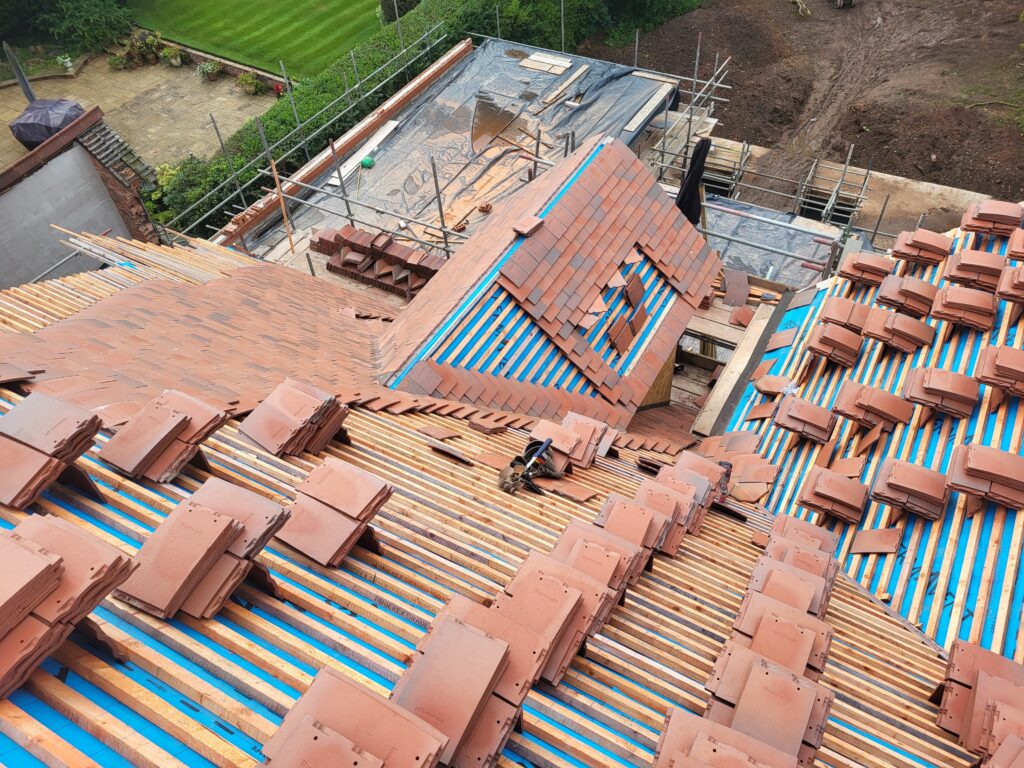
Material selection heavily influences the energy efficiency of a roof extension. Thick insulation, modern roof windows, and thoughtful detailing can turn a simple loft extension into a warm, low energy upper storey that feels like part of the original house rather than an afterthought.
When you upgrade the roof space and original roof structure, consider:
- Insulation: Add high performance insulation to the roof slope and ceiling to reduce heat loss, often cutting heating demand by a significant percentage over the year in a typical UK home.
- Airtightness and ventilation: Seal gaps around the roof windows, external wall junctions, and new permitted development roof elements, while maintaining controlled ventilation so the new space does not overheat.
- Sustainable materials: Choose durable roof tiles and timber from responsible sources, specify roof windows with good energy ratings, and use breathable membranes that help manage moisture.
- Solar and future proofing: Design the main roof or flat roof areas so they can support solar roof tiles or solar panels later, and run cabling routes while the loft conversion work is underway.
Because the roof is such a large surface, improving its performance can deliver noticeable energy savings across the whole existing house, not just the new space. Once you have a clear view of the design and performance goals, it is time to decide who will actually build it.
Selecting the Right Contractor
Contractor selection often determines whether your roof extension feels smooth and well managed or stressful and full of surprises. You want someone who understands permitted development rules, the general permitted development order for class B projects, and the practical side of working on existing buildings without causing damage.
When you shortlist builders for a roof enlargement, loft conversion, or rear or side extension that links into the roof, make sure you:
- Check experience: Ask for examples of similar loft extension projects on semi detached houses, terraced houses, and a detached house so you can see how they handled the existing roof and principal elevation.
- Review references: Speak to past clients about punctuality, communication, how long it takes to build a new roof and whether the project stayed on budget and met building regulations sign off.
- Confirm knowledge: Make sure the contractor understands when works require planning permission, when you can rely on permitted development, and how prior approval and the neighbour consultation scheme work for additional storeys and extend upwards projects.
- Clarify scope: Agree in writing who will handle drawings, technical guidance, structural engineer coordination, planning submissions, and building control inspections.
- Check insurance and guarantees: Confirm that the contractor has appropriate insurance and offers meaningful guarantees on work to the main roof, roof tiles, roof windows, and external wall interfaces.
Contact Us
Impact on Property Value
A well planned roof extension enhances property value by adding usable floor area and making the existing house more attractive to buyers. Recent research based on UK property data indicates that a loft conversion which adds a large double bedroom and bathroom can increase the value of a three bedroom house by up to about 24%.
While the exact uplift varies by region, studies and market reports often estimate that:
- Increasing the floor area of a house by around 10% can add roughly 5% to its value.
- Adding a loft conversion or roof extension with a generous bedroom and bathroom can increase value by roughly 20 to 25% in some parts of the UK.
- Carefully designed rear and side extensions and additional storeys that respect the principal elevation tend to appeal strongly to buyers looking for more space without moving.
Factors that usually have the biggest impact are:
- Quality of workmanship and how well the new space integrates with the original roof, original house, and external wall.
- Compliance with planning permission, permitted development rights, and building regulations so buyers feel confident about the paperwork.
- The amount of natural light, headroom, and how usable the resulting roof space is as a bedroom, office, or extra living area.
- Practical access, such as a proper staircase to the upper storey rather than steep loft ladders or awkward external access.
When these pieces come together, your new loft space is not just more space on paper. It is a comfortable, legal, and attractive addition that makes everyday life easier and boosts the long term value of your home.
Closing Thoughts
If you would like help turning all of this into a clear, realistic plan for your own property, reach out to C Kearney Roofing. Our experienced team combines traditional skills with premium materials and can guide you through everything from early new build and roof extension planning and local planning authority conversations to the final roof tiles, roof windows, and sign off.
Contact us today to discuss your roof extension and get expert advice on your roofing needs.
FAQs
What does “extends beyond the wall or roof slope” actually mean?
In planning terms, “extends beyond the wall or roof slope” describes any part of the extension that sticks out further than the existing external wall line or the plane of the existing roof surface. Under the general permitted development and roof technical guidance, most roof works must not project more than 150 millimetres from the plane of the existing roof slope and must not go higher than the highest part of the existing roof to stay within permitted development rules.
How do the new permitted development rights for building upwards work?
New permitted development rights for upward extensions allow some homes and existing buildings to extend upwards by adding extra storeys without a full planning application, subject to strict height limits and a prior approval process with the local planning authority. For many houses, that means you can add one additional storey to a house with one storey, or up to two additional storeys to a house with more than one storey, as long as the total height and design stay within the general permitted development order limits.
Can I build a roof extension that is more than one storey?
You can only build a roof extension that is more than one storey in very specific circumstances, and you usually need to use the new permitted development rights for additional storeys or make a full planning application if you go beyond standard Class B roof enlargements. The technical guidance explains that where the extension or enlarged part of a house has more than one storey, it must be a set distance from boundaries and comply with height and design limits, so it is vital to confirm the exact rules that apply to your property before you plan multiple storeys in the roof.
C Kearney Roofing LTD
Trusted experts in roofing solutions.
Professional service, reliable craftsmanship, and coverage across the West Midlands.
Locations We Cover
Why Choose Us
- Over 20 years of experience in the industry
- Focused on complete customer satisfaction
- Fully insured for your security
- Workmanship and materials guaranteed
- Rapid response available for emergency situations
- Use only the best materials to protect your property
- Free, no-obligation estimates and honest advice
- We are proud to support our customers before, during, and after every job