
Recycled shingles have become an increasingly popular choice in the roofing industry, combining environmental responsibility with financial practicality. This comprehensive guide explores recycled shingles, emphasising their cost benefits, environmental impact, installation techniques, and the role they play in reducing asphalt shingle waste. By utilising recycled asphalt and promoting responsible shingle recycling, these products offer a sustainable alternative to traditional roofing materials while supporting a greener future.
What Are Recycled Shingles?
Recycled shingles are roofing materials produced by reprocessing old asphalt shingles that would otherwise contribute to landfill waste. Through the recycling asphalt shingles process, discarded shingles, often removed during roof replacements, are collected, sorted at recycling centres, and refined to create new, durable roofing materials.
- Definition: Roofing products made from processed waste shingles.
- Core Materials: Asphalt, sand, clay, plastics, and wood that together provide resilience and longevity.
- Functionality: Serve as a durable and weather-resistant surface comparable to new asphalt shingles.
- Eco-Friendly: Help reduce the burden on landfills and support a circular economy within the construction industry.
These recycled materials are widely accepted across the roofing industry and regarded as a common roofing material, increasingly preferred over more traditional tiles for eco-conscious homeowners and a firm favourite in the latest roofing trends we’ve seen this year.
Environmental Benefits of Recycled Shingles
The roofing industry generates substantial asphalt shingle waste, especially during roof replacements or torn roofing projects. Using recycled shingles offers multiple environmental benefits:
- Waste Reduction: Diverts significant amounts of shingle waste from landfills, easing environmental pressures.
- Sustainability: Supports responsible recycling that transforms old shingles into valuable materials, aiding sustainable building practices.
- Energy Efficiency: Recycled asphalt shingles can enhance roof insulation, reducing energy consumption and lowering heating and cooling bills.
- Raw Materials Preservation: By incorporating recycled materials, the demand for virgin asphalt, sand, and clay is reduced, lessening the environmental footprint from mining activities.
Moreover, recycled shingles and asphalt are increasingly used in various applications beyond roofing, such as paving and hot mix asphalt for driveways and roads, promoting even greater reuse of recycled materials.
Cost Comparison: Recycled versus Traditional Shingles
Recycled shingles offer a cost-efficient alternative to new asphalt shingles, benefiting homeowners and businesses alike. The key comparisons include:
| Feature | Recycled Shingles | Traditional Shingles |
| Initial Cost | Lower | Higher |
| Maintenance Cost | Lower | Higher |
| Environmental Impact | Positive | Neutral/Negative |
- Initial Cost: More affordable due to lower raw material expenses and efficient production processes.
- Long-Term Savings: Reduced repair and replacement costs thanks to their durability, alongside energy savings from improved insulation.
- Maintenance: Less frequent maintenance required, translating into further cost reductions.
These savings, coupled with potential government incentives, make recycled shingles an attractive choice for eco-friendly and budget-conscious roofing projects.
Durability and Performance
Recycled shingles are designed to meet or exceed the performance standards of traditional new asphalt shingles. Their durability ensures they withstand severe weather and deliver long-lasting protection for roofs.
- Robustness: Recycled asphalt shingles resist wind, rain, and temperature extremes effectively.
- Longevity: Often surpass industry life cycle standards, providing decades of reliable service.
- Proven Reliability: Numerous case studies from industry leaders demonstrate their successful use across a variety of roofing projects.
Advancements in asphalt shingle recycling and manufacturing continue to improve the quality and resilience of these products, making them a trusted roofing material.
Installation Techniques and Best Practices
Correct installation is essential to maximise the benefits of recycled shingles. Roofing contractors employ specific methods for both traditional and modern roofing methods to ensure quality and performance:
- Preparation: Assess the existing roof structure and layout to tailor the installation approach.
- Installation Process: Secure shingles accurately with high-quality fasteners and adhesives, ensuring correct alignment and waterproof overlap.
- Final Inspection: Conduct thorough checks to confirm the installation adheres to building codes, environmental regulations, and industry standards.
Expert contractors familiar with sustainable building practices are recommended to guarantee a professional and environmentally responsible roofing installation.
Roofing Services
How Reclaimed Asphalt Shingles Are Processed
Before reclaimed asphalt shingles are ready to be reused, they go through a pretty thorough process. It is not as simple as pulling them off a roof and using them again. The goal is to turn what would be discarded materials into something reliable and long-lasting.
Here is how it usually works:
- Shingles are collected from roof replacements, construction sites, and recycling centres
- They are sorted to remove nails, timber, and other unwanted debris from the waste stream
- The clean material is then ground down into smaller, consistent pieces
- The asphalt content is checked to make sure it meets quality standards
- Finally, it is blended into new asphalt mixtures for reuse in roofing shingles or other building products
What is interesting is that the original asphalt still has real value. Instead of ending up as roofing waste, it becomes a useful by product that can go straight back into production.
It is a smart way of keeping materials in use for longer, while also cutting down on the need for brand new resources.
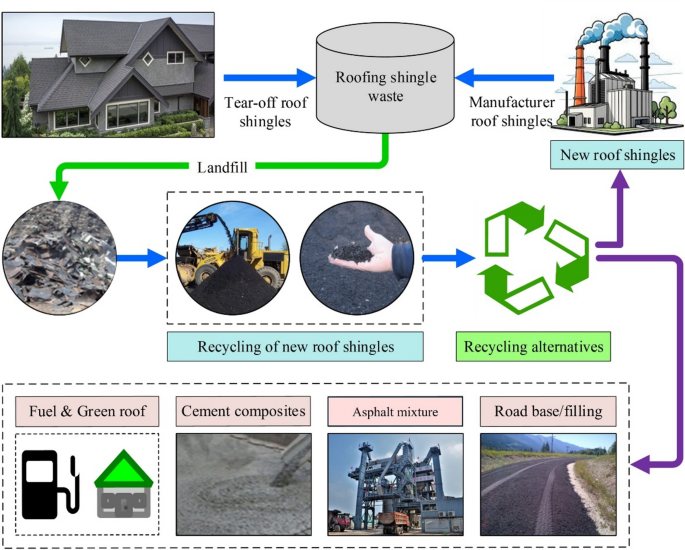
Where Recycled Shingles Are Used
Recycled roofing shingles are more versatile than most people expect. They are not just reused on rooftops, they also show up in a range of construction projects.
Here are some of the most common uses:
| Application | How They Are Used | Why It Matters |
| New roofing shingles | Blended into fresh roofing materials for homes | Reduces demand for new raw materials |
| Road surfacing | Mixed into asphalt mixtures for roads and driveways | Adds strength and flexibility |
| Temporary surfaces | Used for site roads or farm tracks | Affordable and practical |
| Base layers | Laid under roads or paving as a supportive foundation | Improves stability and lifespan |
For most homeowners, the key benefit is in new roofing shingles. You get the same performance you would expect, but with less impact on the environment.
For the wider industry, it is a practical way to deal with growing roofing waste while making better use of what is already available. It is a simple shift, but it makes a big difference over time.
Government Incentives, Regulations and Certifications
Government support plays a significant role in encouraging the use of recycled asphalt shingles and responsible recycling practices:
- Incentives: Tax credits, rebates and grants may be available to homeowners and businesses opting for recycled roofing materials.
- Regulations: Compliance with environmental standards and sustainable building codes is mandatory, ensuring roofing projects minimise their ecological footprint.
- Certifications: Using recycled shingles can contribute towards achieving green building certifications, enhancing property value and appeal.
Consulting local recycling centres and reviewing governmental policy online can help identify relevant support programs before commencing roofing projects.
Industry Leaders and Market Outlook
Industry leaders, recyclers, and manufacturers are driving innovation and expanding facilities dedicated to the recycling and production of recycled shingles.
- Market Growth: Recycling centres and production facilities continue to grow, increasing availability and quality of recycled materials.
- Business Advantages: Companies adopting recycled shingles benefit from improved sustainability profiles and client demand.
- Future Trends: With tightening regulations and rising environmental awareness, the use of recycled asphalt shingles and sustainable roofing materials is set to become standard practice across the construction and roofing industries.
Summary and Key Takeaways
Recycled shingles stand out as a practical and eco-friendly roofing choice, offering a host of benefits that align with modern sustainability goals. Here’s a concise overview of their advantages and implications:
- Cost Savings:
- Lower initial and maintenance costs compared to traditional shingles.
- Potential for long-term savings through enhanced energy efficiency.
- Environmental Impact:
- Significant reduction in landfill waste.
- Support for sustainable construction practices and circular economy.
- Durability and Performance:
- Comparable durability to traditional shingles with added longevity.
- Proven success in diverse roofing projects.
- Installation and Incentives:
- Proper installation techniques are essential for optimal performance.
- Availability of government incentives can further reduce costs.
Closing Thoughts
Considering these factors, recycled shingles not only contribute positively to the environment but also offer financial advantages and robust performance. For those seeking a sustainable and cost-effective roofing solution, recycled shingles present a compelling option.
At C Kearney Roofing, we specialise in high-quality roof replacement and repairs, using a range of roofing materials suited to your home and your budget. Whether you need a full roof replacement, roof repairs, or advice on your options, our experienced team can help you through every step of your roofing project.
Contact us today to discuss your roof replacement cost breakdown and get expert advice on your roofing needs.
FAQs
How do recycled shingles compare with popular roofing materials?
Recycled shingles deliver comparable durability and weather-resistance to popular roofing materials such as slate, clay tiles, and traditional asphalt shingles. The key advantage is their sustainable origin, reducing environmental impact and landfill pressure whilst providing robust performance for British roofs.
Can recycled shingles be mixed with new shingles during roof installation?
Yes, it is possible to install recycled shingles alongside new shingles in certain roofing projects, provided that all materials meet industry standards and the contractor ensures compatibility. This approach combines the fresh appearance of new shingles with the cost efficiency and environmental benefits of recycled products.
Are recycled shingles equally suitable for both residential and commercial roofs?
Absolutely. Recycled shingles are engineered for versatility and can be used on a wide variety of roofs whether domestic residences, business premises, or larger commercial buildings. Their adoption is fast becoming standard practice as the roofing industry seeks greener alternatives to traditional popular roofing materials.
C Kearney Roofing LTD
Trusted experts in roofing solutions.
Professional service, reliable craftsmanship, and coverage across the West Midlands.
Locations We Cover
Why Choose Us
- Over 20 years of experience in the industry
- Focused on complete customer satisfaction
- Fully insured for your security
- Workmanship and materials guaranteed
- Rapid response available for emergency situations
- Use only the best materials to protect your property
- Free, no-obligation estimates and honest advice
- We are proud to support our customers before, during, and after every job