
Choosing the right roofing materials is crucial for both aesthetics and reliability when planning a new roof. The “natural slate vs composite slate” debate centres on two roofing materials that offer highly durable finishes, distinct looks, and unique benefits.
This guide reveals key differences in appearance, performance, longevity, and cost, helping UK homeowners and builders make the best decision for their projects, large or small.
What is Slate Roofing and Why Material Choice Matters
Slate roofing, whether natural or synthetic, is renowned for its durability, weather resistance, and timeless aesthetics. Material choice affects not just cost and appearance but structural requirements, maintenance needs, and overall property value. When comparing “slate roof” options, each material has attributes that make it suitable for various types of homes, climates, and budgets.
Overview of Natural vs Composite Slate
Homeowners commonly deliberate between “natural slate” and “composite slate” as both offer the classic look of slate tiles, but differ in coloration, texture, longevity, and installation processes. Natural slate roof tiles exhibit unique textures and irregular colour patterns, while composite (synthetic slate) roof tiles are uniform in appearance, lighter, and more cost-effective.
Key Decision Factors for Homeowners and Builders
- Style and aesthetics: Authenticity versus uniformity
- Lifespan and durability
- Upfront and lifetime costs
- Structural feasibility and installation complexity
- Sustainability and environmental impact
- Local planning or heritage regulations
Visual Comparison: Natural Slate vs Composite Slate
Natural slate roof tiles present varied textures, subtle irregularities, and occasional shading differences. By contrast, synthetic slate tiles provide a neat, uniform appearance, with consistent sizing and colours that suit modern roofs. Both materials deliver attractive finishes, but natural slate roofs possess a more traditional, hand-crafted aesthetic, especially when installed using overlapping hooks on timber bases. Synthetic slate roof tiles, while visually similar, are smoother and less textured, giving a contemporary look.

What is Natural Slate?
Natural slate is a metamorphic rock mined from the earth and formed under heat and pressure over millions of years. The best roofing slate are usually the varieties: Welsh, Spanish, Canadian, and Vermont slates, each valued for distinct colours and qualities.
Types of Natural Slate Tiles
- Welsh slate: Renowned for durability, deep grey hues, and reputation for longevity
- Spanish slate: Widely accessible, fine-grained, cost-effective
- Canadian and Vermont slate: Unique colours from green to purple, highly resilient
Traditional quarrying involves extracting slate, splitting it into thin tiles, and finishing by hand—preserving each tile’s unique markings and character.
Physical Characteristics
- Dense, non-porous
- High compressive strength
- Variety of colours (grey, black, green, purple)
- Slight variations in thickness and dimension
Why Natural Slate is Considered Premium
Natural slate roofing represents the gold standard for both heritage buildings and luxury new builds. Longevity, aesthetic prestige, and outstanding environmental performance all contribute to natural slate’s status as a premium roofing material.
What is a Composite Slate?
Composite (synthetic) slate roof tiles are manufactured using advanced polymers, recycled rubber, or fibre cement, designed to emulate the appearance of natural slate without heavy weight or high cost.
Types of Composite Slate Tiles
- Polymer: Engineered resins, visually simulate slate
- Rubber-based: Flexible, impact-resistant, lightweight
- Fibre cement: Stable, easy to install, multiple colours
How Manufacturers Replicate Natural Slate
Modern technology enables manufacturers to mould synthetic tiles with realistic surface textures. Composite slate tiles offer consistent sizing, a range of colours, and options for uniform or textured finishes.
Innovations in Synthetic Slate
Breakthroughs in UV resistance, colour-fastness, and impact testing enable synthetic options to perform in British weather for decades, with warranties often provided for 40–50 years.
Natural Slate: Pros and Cons
Advantages
- Exceptional longevity (75–150+ years)
- Superior weather, frost, and fire resistance
- Timeless aesthetic appeal and unique appearance
- High property value enhancement
- Strong environmental profile: recyclable, low carbon, long lifecycle
Disadvantages
- High initial cost (£75–180+ per m²)
- Heavy: significant structural reinforcement needed
- Skilled labour essential; complex installation
- Limited supply, especially Welsh and premium types
- Fragile during install, with risk of breakage
- Minimal warranty duration compared to synthetics
Composite Slate: Pros and Cons
Advantages
- Lower initial cost (£20–50 per m²); affordable budgeting
- Lightweight, easy to install on standard roof frames
- Suitable for rapid installation (less labour required)
- Comprehensive manufacturer warranties (40–50 years)
- Consistent sizing, stable colour options
- Good weather and impact resistance
- Choice of colours and styles
Disadvantages
- Shorter lifespan (40–70 years)
- May lack natural slate authenticity
- Potential for colour fading over time
- Less proven for ultra-long-term durability (relative to natural)
- Possible need for more regular maintenance
- Lower property value enhancement compared to natural slate
Comparison Table: Natural Slate vs Composite Slate
| Attribute | Natural Slate | Composite Slate |
| Lifespan | 75–150+ years | 40–70 years |
| Initial Material Cost (£/m²) | £75–180+ | £20–50 |
| Appearance | Unique textures, natural colour | Uniform, consistent colour |
| Weight | Heavy, needs reinforcement | Lightweight, fits standard roofs |
| Installation Cost | High, skilled labour required | Lower, allows quicker fit |
| Warranty | Minimal (10–20 years) | Long (40–50 years) |
| Value Impact | Strong | Moderate |
| Environmental Impact | Low carbon, recyclable | Varies, often recycled content |
| Maintenance | Low, minor repairs only | Occasional cleaning, possible repaint |
Performance & Durability Comparison
Weather Resistance
Natural slate is notably robust, resisting wind speeds up to 130mph, plus outstanding frost and temperature durability. Composite slate is engineered for good impact resistance, UV stability, and performance in British climates. Both materials withstand heavy rain, though natural slate’s minimal porosity offers best water protection.
Fire Safety & Building Codes
Natural slate roof tiles provide natural fire resistance, meeting heritage and modern building codes with ease. Composite slates are BBA or CE marked but may need confirmation for historic or listed buildings.
Installation Requirements and Process
Structural Considerations
- Natural slate: Roof must support significant weight; may require reinforcement
- Composite slate: Installs easily on standard frames; suits quick renovations
Complexity
Expert craftspeople are essential to work with natural slate tiles and achieve traditional or bespoke finishes. Composite slate is suitable for standard trade roofers, requiring minimal specialist tools.
Installation Timeline and Challenges
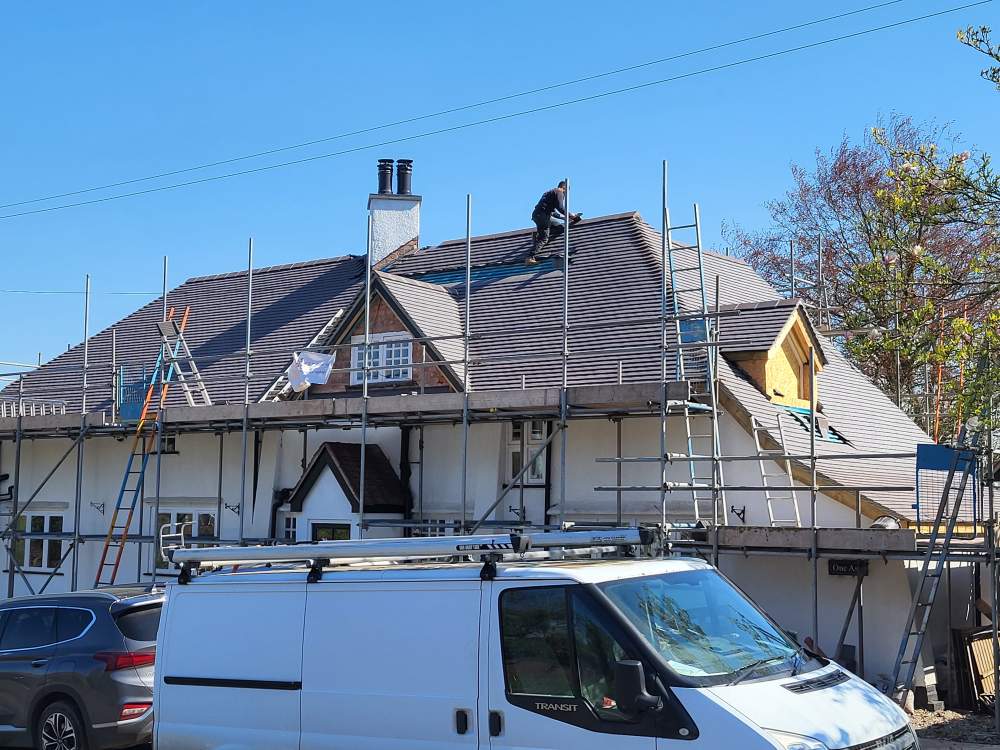
Natural slate often demands longer project timelines and weather contingencies. Composite slate can be installed rapidly and is less impacted by rain or cold spells.
Maintenance and Repair Requirements
Natural Slate
- Inspect annually for loose or cracked slates
- Replace spalled or broken tiles using matching stock
- Clean moss or debris with gentle techniques
- Retain spare tiles from original batch for future repairs
Composite Slate
- Clean surface regularly for best colour longevity
- Perform visual checks for fading or edge damage
- Honour manufacturer’s warranty maintenance protocols
- Replace individual tiles quickly if damaged
Environmental Impact and Sustainability
Natural Slate
- Minimal carbon footprint (0.15–1.62KgCO₂/m²)
- Water and energy consumption far lower than clay, concrete, or metal
- End-of-life recycling possible; tiles often reused after 100+ years
Composite Slate
- Manufactured with recycled polymers/fibre cement in many cases
- Energy-intensive production compared to slate
- Disposal and recycling options depend on manufacturer
- Generally more eco friendly than concrete tiles, but natural slate is the clear winner for sustainability
Decision Matrix: Which Slate is Right for You?
Choose Natural Slate If:
- Budget allows for premium investment
- Maximum longevity and authentic heritage style desired
- Property value enhancement is a priority
- Building structure supports heavy roof materials
Choose Composite Slate If:
- Budget constraints apply
- Structure cannot bear heavy slate
- Fast installation and long warranty required
- Flexibility and colour choice are important
- Modern home design fits synthetic roof tiles
Closing Thoughts
Deciding between natural slate and composite slate for a roof depends on budget, aesthetic preference, project needs, and property type. For the West Midlands and across the UK, natural slate delivers unrivalled longevity, prestige, and environmental value, while composite slate ensures affordability, flexibility, and convenient installation.
At C Kearney Roofing, we specialise in slate roof replacement services to enhance the longevity and strength of your home’s roof. Our skilled professionals are well-versed in the unique challenges and complexities of working with slate roofing materials and are ready to help.
By choosing our slate roof replacement service, you’ll receive expert attention to detail throughout the entire process, and a long-lasting final result.
Contact us today to discuss your roofing needs and find the perfect natural slates for your home or business.
FAQs
Are synthetic materials a sustainable roofing option compared to other materials?
Advances in synthetic materials mean many composite slate tiles now utilise recycled content, making them a more sustainable choice than some traditional roofing options like concrete tiles or older composites.
Which roof type is best for energy efficiency and less maintenance?
Natural slate roofs provide excellent energy efficiency due to their density and insulating properties, while both slate and composite slate require less maintenance than many other materials, such as asphalt or clay tiles.
How do homeowners know which roofing material is the best choice for their needs?
The best choice depends on priorities: natural slate is ideal for those seeking authenticity and longevity, while composite slate suits those who want lightweight materials, quick installation, and a sustainable choice that fits modern or eco-friendly projects.